
Work Package 5 - Strengthen human capital base through increased mobility and training
WP5 aims to strengthen human capital through international, interdisciplinary and intersectoral mobility and through the development of research and soft-skill competencies. Activities started during RP1 according to the GA timing. The training programme is proceeding as planned and is integrated with the scientific implementation of WP3.
The D3.1 deliverable defined a dual strategy linking research-capacity building with advanced training. Training needs were connected to the three thematic research areas: TLR signalling, cytosolic nucleic-acid sensing and RNA-based therapeutic strategies. The training framework includes exposure to advanced techniques such as genetically engineered mouse models, immunophenotyping, bulk and single-cell RNA-seq, proteomics, metabolomics, functional inflammatory assays, translational validation and advanced data analysis.
The 12th International Course on the Care and Use of Laboratory Animals: mice, rats and zebrafish.
Within the INFLACARE training programme, early-career researchers, including students and postdoctoral fellows, participated in the 12th International Course on the Care and Use of Laboratory Animals: mice, rats and zebrafish. The course was organised by the Department of Biology of the University of Crete together with IMBB-FORTH and took place between April and May 2026. It was structured in two complementary parts: a remote lecture-based module followed by an intensive hands-on training week at the University of Crete in Heraklion. The activity was highly relevant to INFLACARE, since the programme includes experimental work using preclinical models to study inflammatory mechanisms, immune-mediated pathology, neuroinflammation and therapeutic intervention. Properly designed and ethically conducted animal studies are essential for translating mechanistic findings on inflammation into robust disease models and preclinical testing strategies. The course therefore provided INFLACARE researchers with the required scientific, regulatory and practical preparation for animal-based biomedical research.
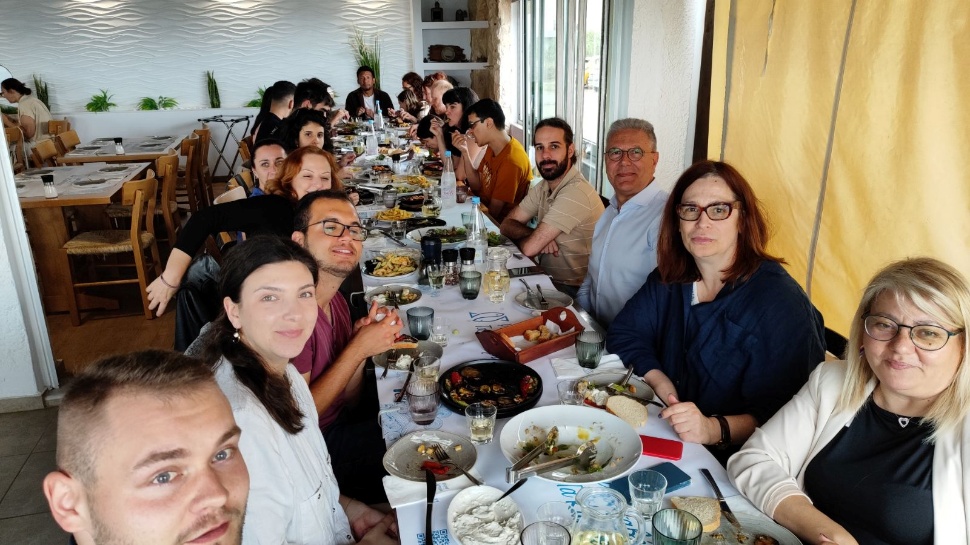
The online component introduced participants to the regulatory and conceptual framework governing the use of animals in research. It addressed European and national legislation, ethical review, project authorisation, the role of animal welfare bodies, application of the 3Rs, severity classification, humane endpoints, harm-benefit analysis, anaesthesia, analgesia, euthanasia, health monitoring, housing, enrichment, nutrition, transport, Good Laboratory Practice, experimental design, statistical interpretation and transparent public communication of animal research. Additional lectures covered mouse embryo manipulation, behavioural assessment and the generation of genetically modified animal models, including transgenic, knock-in and knock-out models relevant to human disease. The practical week provided supervised laboratory training in the main animal systems used in biomedical research. Participants received hands-on instruction in the handling of rats, mice and zebrafish, including basic procedures, stitching, drug administration, anaesthesia and analgesia, welfare assessment and zebrafish water-quality monitoring. The course concluded with formal assessment through final examinations and group presentations on experimental protocols and disease-model applications. The programme followed the requirements of Directive 2010/63/EU and FELASA recommendations for functions A, B, C and D, covering the performance of procedures, design of procedures and projects, animal care and humane killing. Successful completion led to a FELASA-accredited certificate confirming competence to work with laboratory animals. This training contributed directly to INFLACARE’s capacity-building objectives by ensuring that young researchers are equipped to conduct animal studies with high standards of welfare, reproducibility, regulatory compliance and scientific rigour. It also reinforced the programme’s translational dimension by supporting the responsible use of preclinical models in inflammation and disease research.
Introduction to Practical Bioinformatics Course (March 12–13).
As part of the training activities implemented during the reporting period, members of the InflaCare team participated in the hands-on course “Introduction to Practical Bioinformatics”, jointly organized by the University of Crete, HCMR and FORTH and held on-site at FORTH in Heraklion on 12–13 March 2026. The course was designed for beginners with little or no prior experience in bioinformatics and was open to PhD and MSc students, staff members, and researchers affiliated with HCMR, NHMC, FORTH, and the University of Crete. The course provided practical training in core computational skills needed for modern biomedical research. Topics included operating systems, command-line use, software installation, GitHub, Visual Studio Code, basic programming in R and Python, workflow design, bash scripting, error and log file handling, use of servers and high-performance computing clusters, biological databases such as GenBank, EMBL and RefSeq, basic bioinformatics tools, and introductory plotting and statistical analysis using programming languages. The course was fully hands-on, with participants working on their own laptops and applying the concepts to complete a small bioinformatics project by the end of the training. This activity contributed directly to the objective of strengthening human capital by equipping early-career researchers and staff with foundational bioinformatics competencies. These skills are relevant to the project’s research programme, which relies on the generation, analysis and interpretation of large-scale biological datasets, including genomics, transcriptomics and other omics-based approaches. Participation in this course therefore supported the development of technical capacity within the team and improved the ability of researchers to engage with computational workflows, reproducible data analysis and interdisciplinary research.
Continuous Scientific Mentoring and Project-Specific Supervision of Early-Career Researchers.
As part of the INFLACARE training and mentoring programme, Prof. Manolis Pasparakis held regular scientific meetings with the recruited PhD students and postdoctoral researchers. These meetings provided continuous, hands-on scientific guidance and ensured close supervision of the experimental work carried out within the programme. The meetings focused on the design and refinement of experiments, interpretation of emerging results, discussion of technical and conceptual challenges, and troubleshooting of experimental procedures. They also provided a structured forum in which early-career researchers could present preliminary data, receive feedback, revise experimental strategies, and align their work with the broader scientific objectives of INFLACARE. Through this regular interaction, trainees were exposed to high-level scientific reasoning, rigorous data evaluation, and best practices in inflammation research. This mentoring activity strengthened the training dimension of INFLACARE by combining formal training with continuous project-specific supervision. It supported the development of independent research skills, improved experimental planning, enhanced critical analysis of data, and helped ensure that the research projects progressed in a coherent and scientifically robust manner.
Soft-skills and career-development elements are being embedded into team mentoring, scientific planning, grant preparation and communication/dissemination activities. The project remains on track for the later formal interim evaluation of research and soft-skills training.
- Research training aligned with active experimental implementation.
- Mentoring and team integration initiated under the ERA Chair framework.
- Mobility and specialized training planning progressing as expected.
- No deviation from the DoA.