
Work Package 13 - Raise the reputation of IMBB and promote communication of R&I results
WP13 covers dissemination, exploitation and communication. During RP1, the original PDEC was prepared and the dissemination/exploitation/communication strategy was established. The PDEC is structured around academic dissemination, exploitation pathways and communication with society.
The academic dissemination plan includes publications, scientific meetings, workshops, training courses, protocol/resource sharing and a final conference. The exploitation pathway follows a Quadruple Helix model linking academia, industry, public authorities and civil society. Communication activities target the scientific community, industry/economy stakeholders, public-sector actors, patients, NGOs, schools and the general public.
During RP1, the main output was the establishment of this strategy and its alignment with project activities. The next reporting period will focus on implementation and measurable engagement outputs, including website visibility, public communication training, open lab activities, ambassador presentations, newsletters, media articles, podcasts/videos and social-media presence.
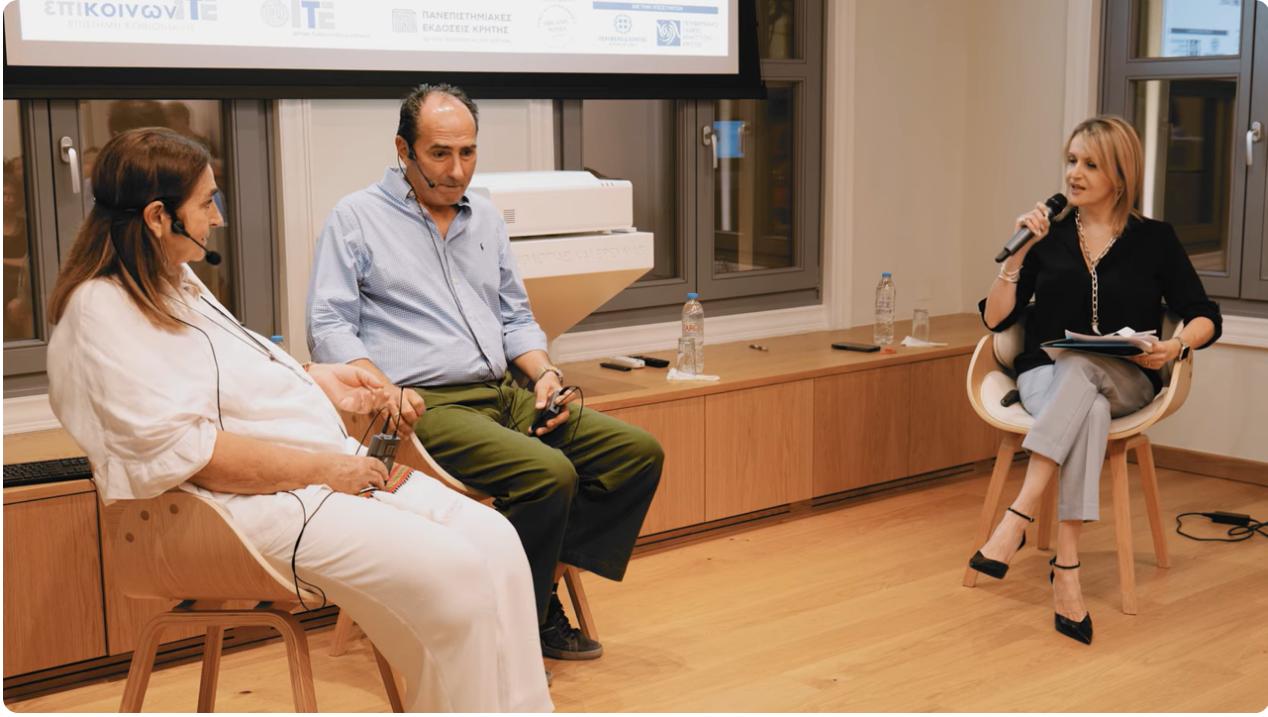
On 3 October 2025, INFLACARE-related communication activities included the online dissemination of the public event “And they lived well…”, held at the FORTH Science and Culture Centre and featuring Prof. George Garinis together with author Sofia Mantouvalou, moderated by Anthi Strataki. The event was designed as an open, creative and participatory dialogue on ageing and age-related diseases inclusing inflammation, avoiding a purely technical or academic format and instead connecting scientific knowledge with literature, humour, personal experience and public reflection. The discussion presented ageing as both a biological process and a broader human, cultural, social and intergenerational experience. Prof. Garinis explained, in accessible language, how ageing is associated with biological wear, DNA damage accumulation, cellular decline, chronic inflammation and age-associated disease, while stressing that ageing should not automatically be equated with illness. A central message was that the societal and scientific challenge is not only to prolong lifespan, but to increase the number of healthy, active and meaningful years. The event also addressed wider issues relevant to INFLACARE, including demographic ageing, the burden of chronic inflammatory and degenerative diseases, subjective age, intergenerational relationships, social participation, healthy lifestyles, storytelling and the role of literature in challenging stereotypes about older age. With 885 YouTube views, the event contributed to the visibility of FORTH research, broadened public discussion around ageing, inflammation and healthy longevity, and strengthened INFLACARE’s communication objective of connecting inflammation science with society, culture and everyday life.
- D13.2 Original PDEC completed.
- Dissemination, exploitation and communication framework established.
- Quadruple Helix stakeholder model adopted.